Domestic South American Camelids

A living heritage of high-Andean communities

Alpaca

Scientific name

Vicugna pacos

Breeds and qualities

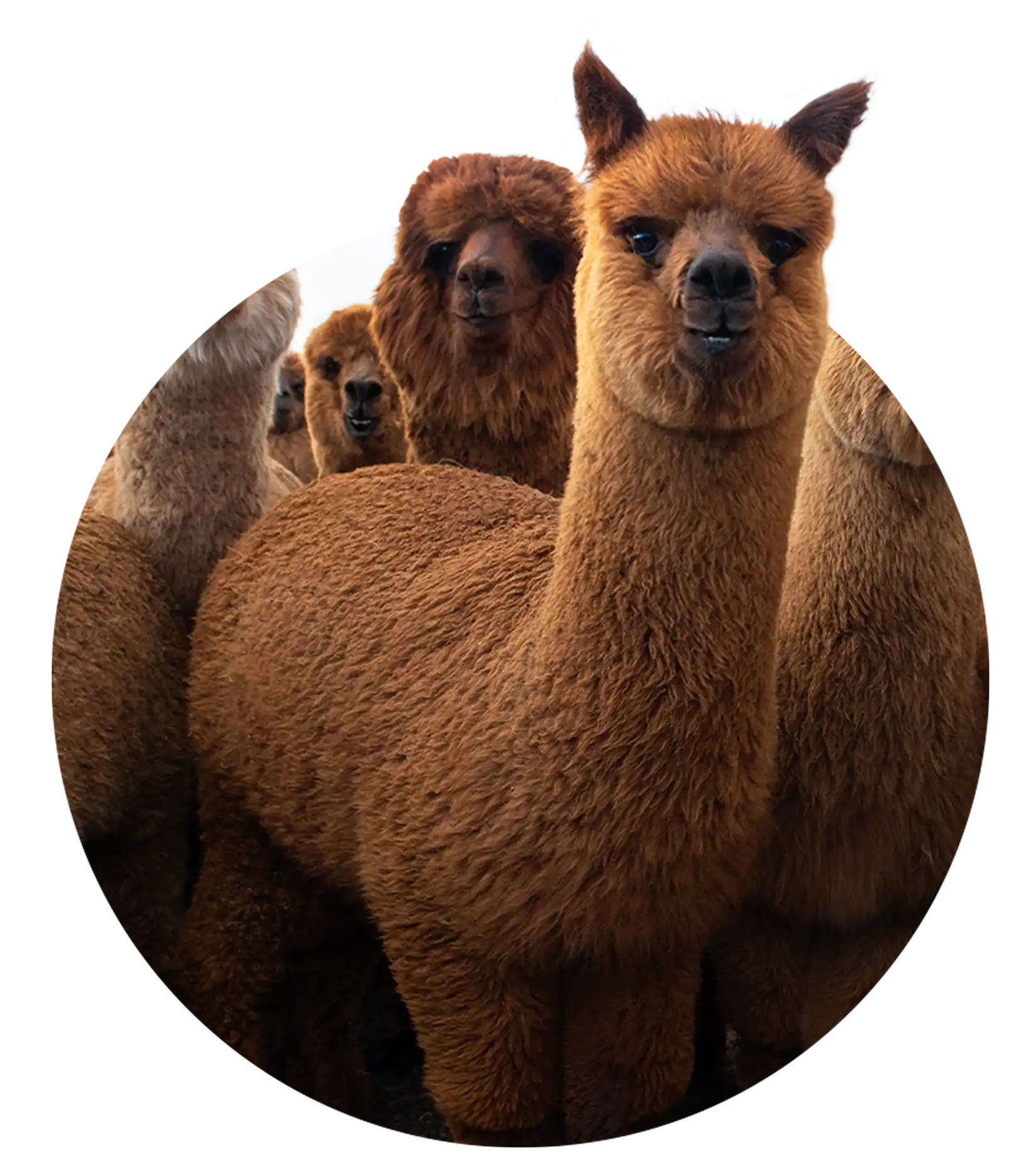
The Huacaya alpaca, the predominant type representing 85% of the population, is known for its voluminous fleece with crimped locks, a full and fluffy structure, greater density, and the widest range of natural shades.


The Suri alpaca, which makes up the remaining 15% of the population, is recognised for its long fibre with hanging locks, straight, silky, and more elastic.

Huacaya

  • Crimped, full, fluffy locks.
  • Protects the body; wide fineness range (16 to 32 microns).
  • Less lustrous, higher density, less elastic, with a tendency toward friction.

Suri

  • Straight, softer fibre.
  • Wide fineness range (18 to 32 microns), divided lock structure, exposes the back, and is lustrous with hair-like characteristics.
  • Greater length, long hanging locks, higher density, more elastic.

Llama

Scientific name

Llama glama

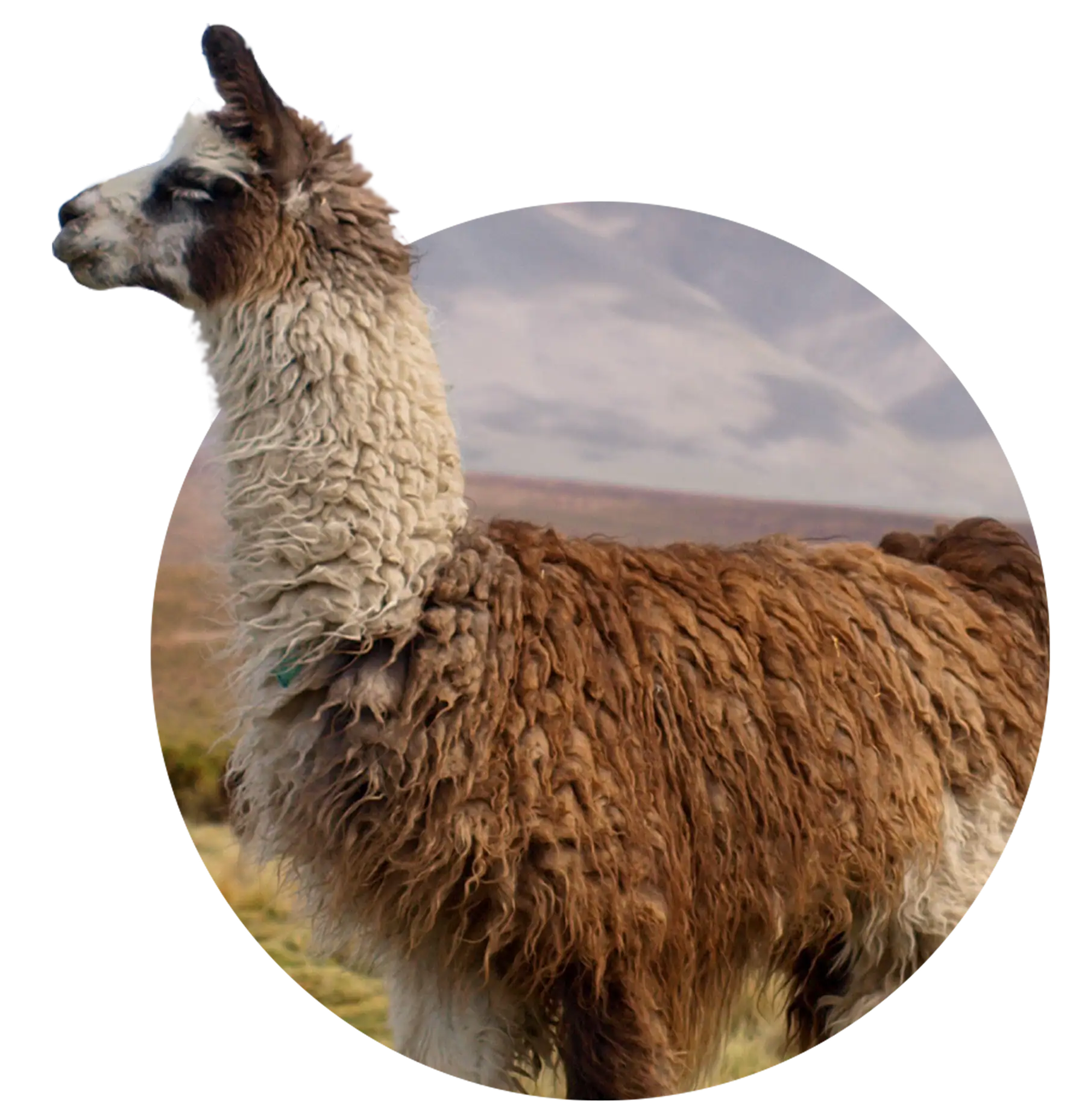
Q’ara

  • Irregular locks, slightly crimped or straight, open type, with little fluffiness.
  • Low thermal protection capacity; highly variable fineness (20 to 40 microns); low lustre; coarse to the touch; greater length; low density of usable fibre; low elasticity; high presence of coarse fibres or guard hairs.
  • Tends to matting and friction, which lowers its textile quality.
  • Requiere descerdado intensivo para su aprovechamiento.

Ch’aku

  • Wavy locks, slightly fluffy.
  • Good thermal protection capacity; medium to coarse fineness (18 to 30 microns); low to moderate lustre; medium to long length; moderate elasticity; with a lower tendency to friction.
  • It still requires dehairing (though to a lesser degree), and its fibre can be used in semi-fine or artisanal textiles.